Understanding the Core: Cylindrical Lens Optics
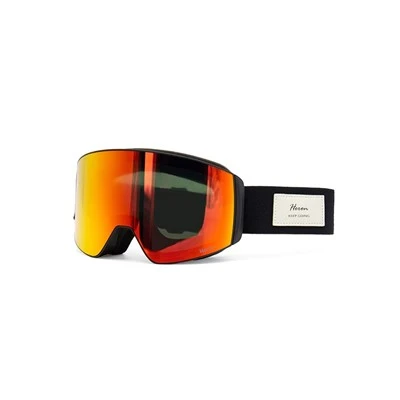
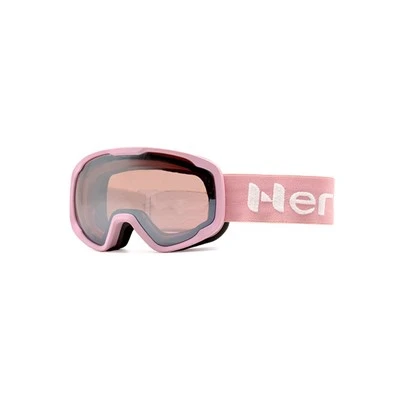
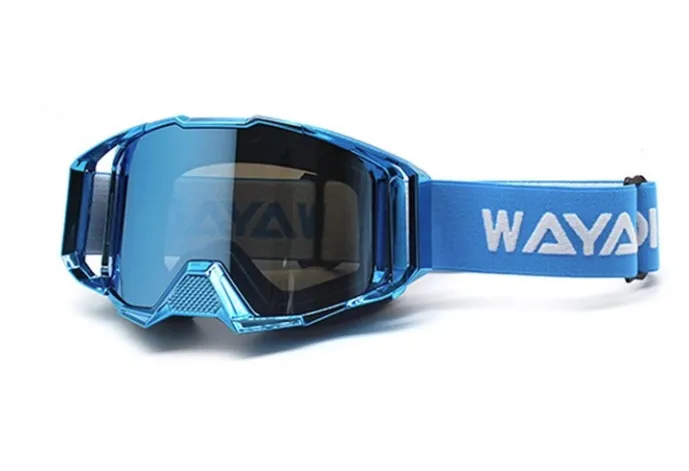
Unlike spherical lenses, cylindrical lenses curve primarily along one axis. This creates distinct advantages for ski goggles:
1. Enhanced Panoramic View: The flatter vertical profile of cylindrical lenses provides a wider, more natural horizontal field of view, crucial for spotting obstacles, terrain changes, and other skiers in peripheral vision. Distortion is minimized horizontally.
2. Optimized Fit & Compatibility: The cylindrical shape often contours more naturally to the face and integrates seamlessly with most helmet designs, improving seal integrity – the first line of defense against fog.
3. Improved Anti-Fog Performance Foundation: The simpler, less complex curvature of a cylindrical lens (compared to a highly spherical one) creates a more uniform surface. This consistency is critical for the uniform application and effectiveness of advanced anti-fog coatings and treatments. Fewer complex curves mean fewer potential weak spots for condensation nucleation.
The Anti-Fog Imperative: Beyond Basic Coatings
Fog forms when warm, moist air from your face hits the cold lens surface, condensing into tiny water droplets that scatter light. True performance AF systems are multi-layered:
1. Applied via sophisticated plasma-enhanced chemical vapor deposition or dipping processes, these coatings are baked into the lens substrate. They work by attracting water molecules, causing condensation to spread into an invisible, uniform film rather than beading up as light-scattering droplets. This is the core "AF" layer.
2. Applied over the AF layer, this repels water (snow, rain) and oils (skin grease, sunscreen). It protects the underlying AF coating, enhances scratch resistance, and aids in shedding moisture. Think of it as the lens's durable "shell."
3. Critical! High-quality, dense foam acts as a physical barrier and wicks moisture away from the lens edge. Cheap foam traps moisture, guaranteeing fog.
4. Strategically placed passive vents (intake/exhaust channels) create consistent airflow to evacuate warm, humid air without creating cold drafts on the eyes. Active venting systems (battery-powered fans) offer the ultimate defense in extreme conditions.
Why Cylindrical + Advanced AF is a Winning Combo?
Superior Clarity Consistency: The uniform cylindrical surface allows the hydrophilic AF coating to perform more reliably across the entire lens, minimizing "patchy" fogging common on complex spherical shapes.
Enhanced Durability: The robust AF and top-coat systems are less prone to degradation during cleaning or flexing on a cylindrical surface compared to highly stressed spherical curves.
Optimized Airflow: The lens shape often complements efficient vent channel design, further reducing the moisture load the AF system must handle.
Performance Value: This combination delivers exceptional optical clarity, wide FOV, and reliable fog resistance – the holy trinity for serious skiers and riders – at a compelling performance-to-price point.
Manufacturing & Quality Insights:
- Coating Integrity is Paramount: The adhesion and uniformity of the AF coating are critical. Rigorous environmental testing (rapid temperature/humidity cycling) simulates real-world conditions to ensure longevity. Scratches penetrating the top coat will compromise the AF layer.
- Frame/Lens Seal Precision: Even the best AF system fails if warm, moist air leaks in. Meticulous frame design and foam selection/compression are non-negotiable.
- Lens Tinting & AF: Advanced AF coatings must be compatible with various tints (e.g., rose for flat light, dark for sun) and photochromic/transition technologies without performance loss.