The Physics of Pink: Managing "Flat Light"
The most common misconception is that dark lenses are always better. In reality, light pink or rose-tinted lenses are a specialized tool for Low-Light and Overcast conditions. In the industry, we measure this via VLT (Visible Light Transmission).
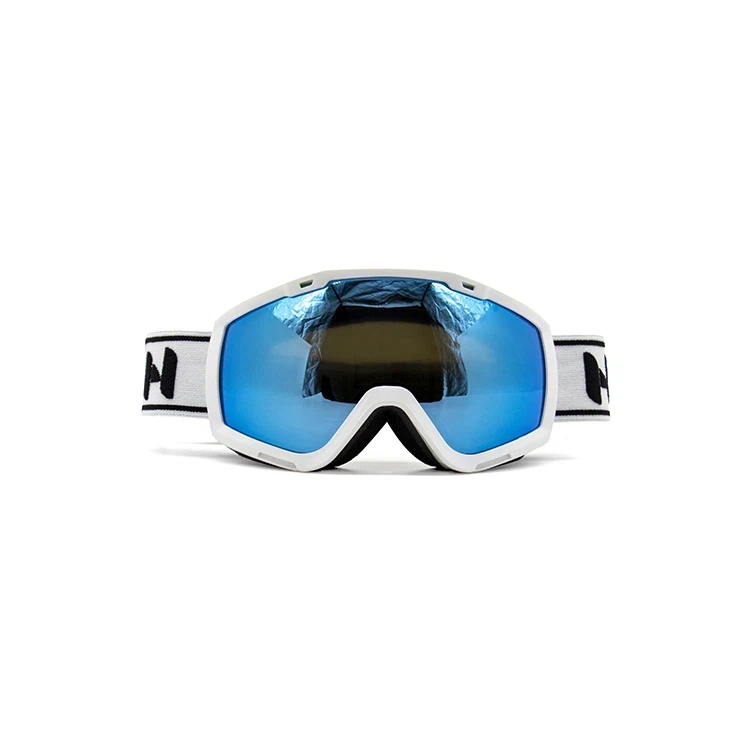
Light pink lenses typically fall into the Category 1 or 2 range (around 35%–60% VLT). On a "flat light" day-when the sky is grey and the snow looks like a featureless white sheet-the blue light reflecting off the snow makes it impossible to see bumps or icy patches. The pink tint acts as a high-contrast filter, neutralizing the blue light and enhancing shadows. This improves depth perception, allowing the skier to react to terrain changes before they cause a wipeout.
Lens Architecture: The "Double-Pane" Secret
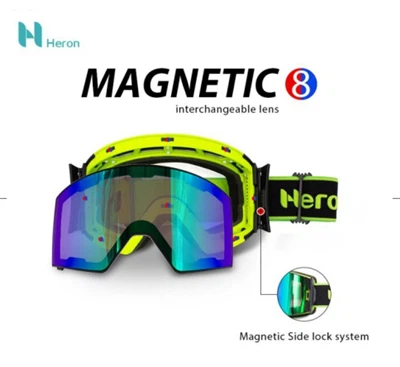
When you look at a professional goggle, you aren't looking at one piece of plastic; you're looking at a thermal system. Most high-quality goggles, like the ones in the Heron line, utilize a dual-lens construction.
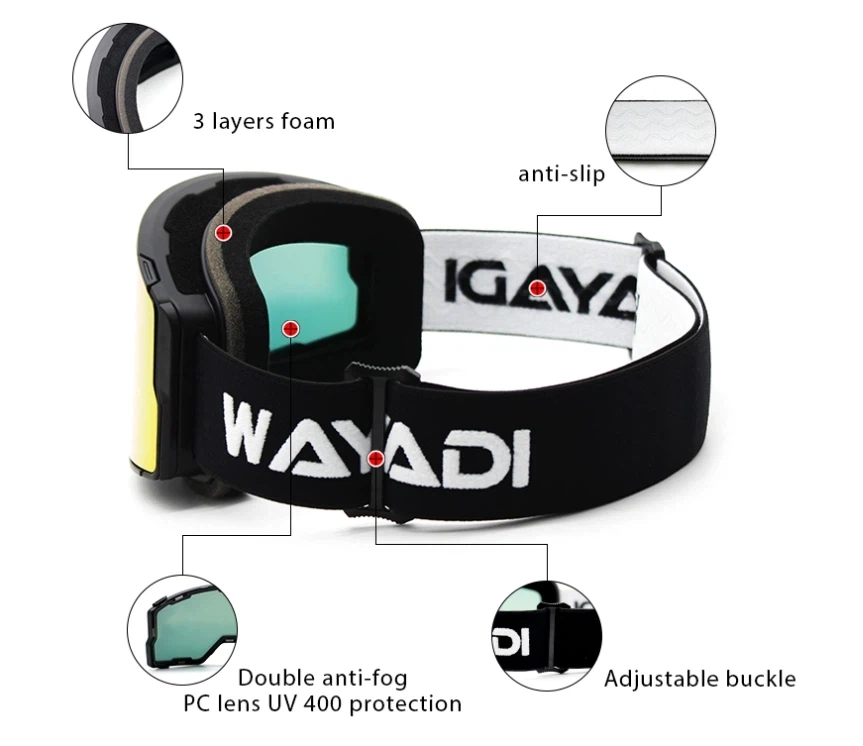
We bond an outer Polycarbonate (PC) lens-chosen for its incredible impact resistance-to an inner lens using a high-density structural foam gasket. This creates a sealed "dead air" space, acting exactly like a double-pane window in a house. This thermal barrier prevents the cold outside air from meeting the warm, moist air from the rider's face, which is the primary cause of internal condensation.
Material Science: TPU and PC Durability
From a manufacturing standpoint, the frame material is just as critical as the lens. We use TPU (Thermoplastic Polyurethane) because it remains flexible at sub-zero temperatures. A cheap plastic frame will become brittle and crack in -10°C weather, potentially causing injury during an impact. TPU "gives" and absorbs energy.
The lenses are treated with a hard-coat anti-scratch layer on the exterior and a hydrophilic anti-fog coating on the interior. The interior coating is actually a porous layer that absorbs moisture molecules before they can form fog droplets-a feat of chemical engineering that requires precise application during the clean-room assembly phase.
Ergonomics and "OTG" Integration
Finally, there is the interface between the goggle and the human face. We utilize triple-layer high-density face foam. The layer closest to the skin is usually a soft fleece that wicks sweat, while the inner layers act as a shock absorber.
Furthermore, modern designs are increasingly OTG (Over The Glasses) compatible. This requires us to engineer specific "cut-outs" in the TPU frame to allow eyeglass temples to pass through without putting pressure on the rider's face. Coupled with an adjustable, silicone-backed anti-slip strap, the goal is "zero-pressure" fit-where the rider forgets they are wearing goggles at all.